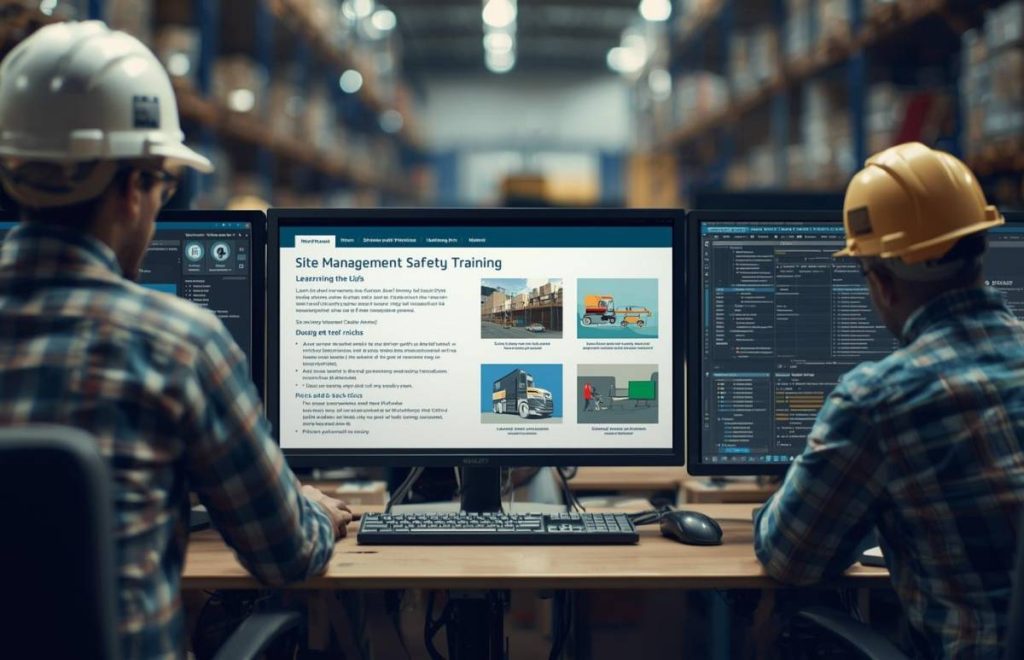
For years, the standard way to get your Site Management Safety Training Scheme qualification involved taking a week off work, commuting to a training centre, and sitting in a slightly stuffy room with twenty other people. It was the accepted norm, but the landscape of professional development in the UK construction industry has shifted dramatically. Nowadays, more people than ever are choosing an SMSTS online course to meet their health and safety requirements. It is not just about convenience; it is about how we actually learn and retain information in a modern work environment.
The transition to remote learning was initially born out of necessity, but it has stayed because it works. Site managers are busy people. They are often the first on-site and the last to leave, juggling subcontractors, materials, and safety protocols. Finding five consecutive days to be away from a project is a massive ask. By moving the training into a virtual space, the industry has managed to keep the high standards of the CITB (Construction Industry Training Board) while making the process far more accessible for the people who actually need the qualification.

What exactly happens during the training
If you have never done a high-level course via video link, you might wonder if it carries the same weight as traditional training. The short answer is yes. An SMSTS online course is not a series of pre-recorded videos that you watch at your own pace while scrolling through your phone. It is a live, tutor-led environment that mirrors the classroom experience exactly. You are logged into a platform like Zoom or Microsoft Teams, interacting with a qualified instructor and other professionals from across the country.
The curriculum is rigorous because the role of a site manager is critical. You are responsible for the lives of everyone on your site. Therefore, the course covers a vast range of legal and practical topics that ensure you are fully equipped to manage safely. Some of the core areas you will dive into include:
- The Health and Safety at Work Act 1974 and how it applies today
- How to conduct and document thorough risk assessments and method statements
- Managing safety in high-risk areas like demolition, scaffolding, and excavations
- Understanding the CDM (Construction Design and Management) Regulations
- Effective communication strategies for safety briefings and tool-box talks
- Implementing environmental management systems on-site
The practical benefits of learning from home
One of the most immediate benefits of an SMSTS online course is the removal of the daily commute. If you live in a rural area or are working on a remote site, finding a local training centre can be a nightmare. When you learn online, your classroom is wherever you have a stable internet connection and a quiet space. This saves a significant amount of money on fuel, parking, and potentially even overnight accommodation, which makes the overall cost of getting certified much lower.
Beyond the financial savings, there is the comfort factor. Being in your own environment allows you to set up your workspace exactly how you like it. You have your own coffee, your own chair, and a quiet space where you can actually focus. Many people find they are more willing to participate in discussions and ask questions through a digital platform than they might be in a physical room full of strangers. This increased engagement often leads to better exam results and a deeper understanding of the safety protocols being taught.
Technical requirements and getting prepared
To successfully complete an SMSTS online course, you do need a few things in place. It is not enough to just have a smartphone. Because the course involves group exercises and looking at detailed legislative documents, you really need a laptop or a desktop computer with a decent-sized screen. A stable internet connection is non-negotiable, as you are required to be on camera for the duration of the course to satisfy CITB attendance requirements.
Preparation is key to getting the most out of the five days. Most providers will send you the physical course books, such as the GE700 construction site safety manual, before the start date. It is a good idea to familiarise yourself with the layout of these books early on. During the course, you will be expected to find specific regulations and guidance quickly, so knowing your way around the index can save you a lot of stress during the open-book elements of the training.
How the assessment works in a virtual world
A common concern is how the final exam is handled. People often assume that an online exam might be easier or perhaps more confusing to navigate. In reality, the standards are identical to the paper-based version. The exam is invigilated remotely, meaning the tutor monitors the group via their webcams to ensure the integrity of the test. It consists of multiple-choice questions and a few short-answer questions that require a more detailed explanation of safety procedures.
The assessment is not just about the final exam, though. Throughout the five days, you will be evaluated on your contribution to group projects and your ability to apply what you have learned to real-world scenarios. This holistic approach ensures that by the time you reach the final day, you are not just memorising facts to pass a test, but actually developing the mindset of a safety-conscious site manager. The certificate you receive upon passing is the same CITB-recognised qualification you would get in person, and it is valid for five years.

Why this is the right move for your career
In the current market, having an SMSTS certificate is essentially a prerequisite for any site management role. Major contractors and developers simply will not allow a manager to run a site without it. Choosing the online route shows that you are adaptable and comfortable with modern digital tools, which is an increasingly important trait in the construction sector as we move towards more digital project management and BIM (Building Information Modelling) technologies.
The flexibility of these courses also means you can often find schedules that suit your specific needs, such as one-day-a-week options over five weeks, rather than a solid block of five days. This allows you to stay on top of your projects while still progressing your professional qualifications. It is about making the training fit your life, rather than forcing your life to fit around a rigid training schedule.
When selecting a provider for your training, it is vital to ensure they are fully accredited by the CITB. This guarantees that the content is up to date with the latest UK legislation and that your certificate will be recognised by employers nationwide. The best providers offer plenty of support before the course starts, ensuring your tech is working and you have all the materials you need to succeed from the moment the first session begins.
Managing a construction site is one of the most demanding jobs in the country. The pressure to deliver on time and within budget is constant, but safety can never be compromised. By engaging with a high-quality online training programme, you are investing in your own skills and ensuring that every worker who steps onto your site is protected by the best possible management practices. The move to digital learning has simply made that investment easier and more efficient than ever before.

Emily Harrington specializes in green innovation, renewable energy solutions, and corporate sustainability. She writes about emerging technologies and sustainable business practices that drive long-term success.